

This guide provides a detailed overview of three primary types of spring compressors—coil spring compressors, manual spring compressors, and pneumatic spring compressors—with practical insights into design, application, safety, and selection. Drawing from extensive industry experience in automotive service equipment, this article reflects best practices used in professional workshops worldwide.
Introduction to Spring Compressors
A spring compressor tool is designed to safely compress suspension coil springs during removal or installation. Coil springs store significant mechanical energy under load. Improper handling without a dedicated strut spring compressor can result in severe equipment damage or personal injury.
In modern suspension systems—particularly MacPherson strut assemblies—the spring must be compressed before the top mount or shock absorber can be removed. A properly engineered suspension spring compressor ensures:
• Controlled compression force
• Even distribution of load
• Secure clamping to prevent slippage
• Reduced technician fatigue
• Compliance with workshop safety standards
Professional repair centers prioritize equipment that delivers structural strength, mechanical stability, and operational precision. Selecting the correct type of spring compressor for automotive repair directly impacts both safety and efficiency.
Coil Spring Compressor: Design and Use
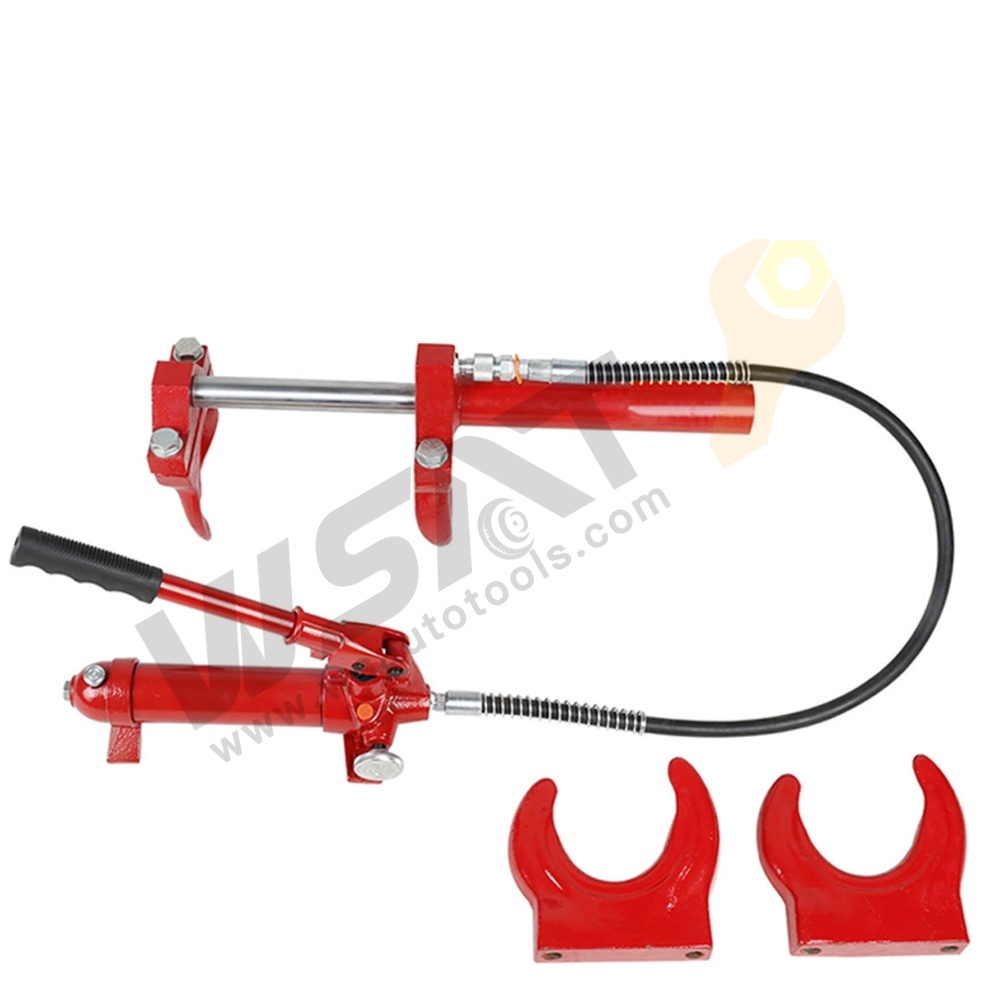
Winsen Portable Power Coil Spring Compressor
A coil spring compressor is the most widely used version in general suspension repair. It is engineered for versatility and compatibility across various vehicle types, including passenger cars, SUVs, dirt bikes, and pickup trucks.
Design Characteristics
Most coil spring compressors feature:
• Dual-hook or multi-claw clamping mechanisms
• High-strength steel construction
• Threaded drive shafts or mechanical compression rods
• Compact, portable configuration
Many professional-grade models allow clamping of suspension springs without dismantling the axle, significantly reducing labor time during on-vehicle service. This makes them highly efficient for routine strut replacement.
Practical Advantages
• Universal application across multiple vehicle platforms
• Easy operation and transport
• Reduced need for suspension disassembly
• Accurate and controlled compression
A portable power coil spring compressor is particularly valuable in mobile repair environments or workshops with limited space. Precision-machined threads and hardened steel hooks ensure secure grip and structural durability under high load.
When properly positioned, the coil spring compressor distributes compression evenly, minimizing the risk of distortion or sudden release.
Manual Spring Compressor: Advantages and Limitations
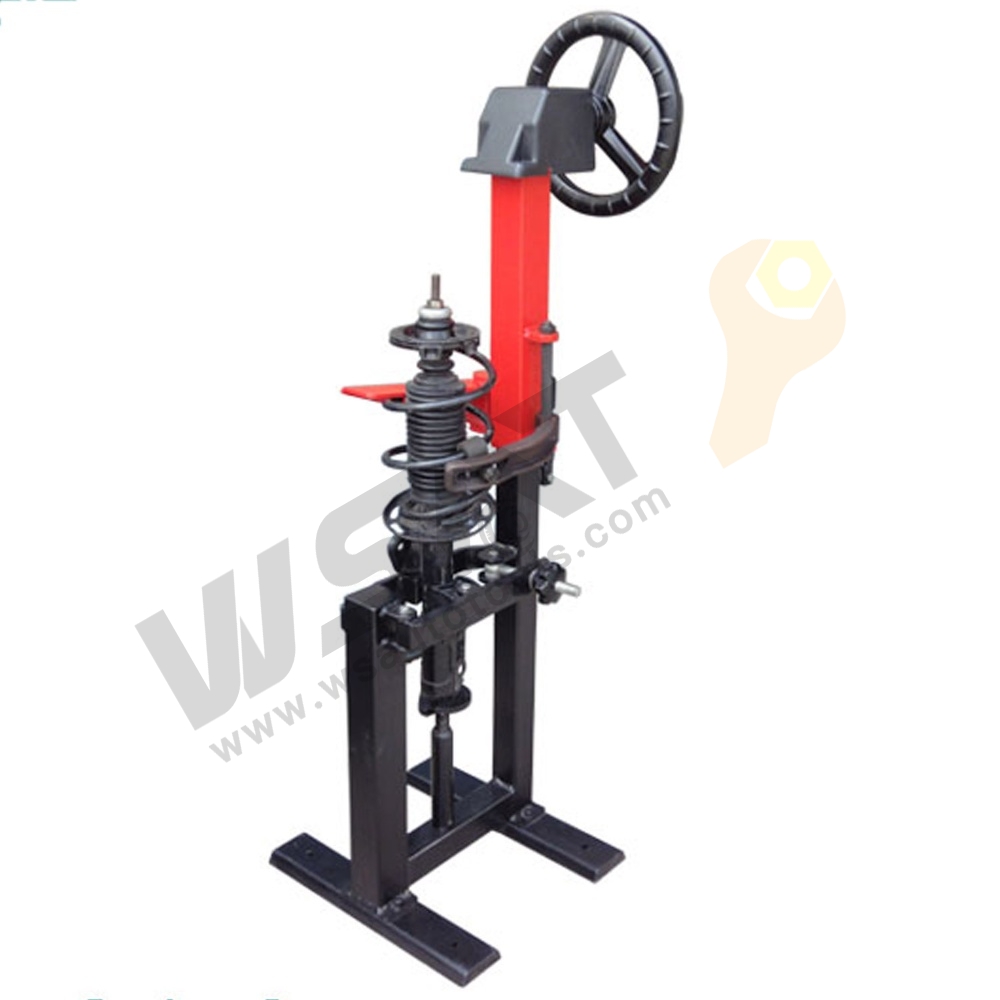
Winsen Professional Manual Spring Compressor
A manual spring compressor operates using mechanical force—typically through a threaded rod or screw mechanism. Despite the rise of powered alternatives, manual systems remain widely used due to cost efficiency and structural simplicity.
Structural Features
High-quality manual spring compressors typically include:
• Cast steel chuck spring devices
• Dual locking positions for firm spring retention
• Circular disc locking systems for rapid vertical movement
• Adjustable arms compatible with different vehicle models
• Fixed spring clips for enhanced safety
The use of cast steel locking chucks ensures secure engagement at two fixed positions, significantly improving safety during compression. Circular disc designs allow faster vertical movement, making operation more time- and labor-efficient.
Advantages
• Lower acquisition cost
• Minimal maintenance requirements
• Adjustable for various spring diameters
• No external power source required
Limitations
• Greater physical effort required
• Slower operation compared to pneumatic systems
• Increased dependency on technician skill and torque control
Manual spring compressors are ideal for small workshops, independent garages, and low-frequency suspension repair operations. However, careful torque application and alignment are critical to prevent uneven compression.
Pneumatic Spring Compressor: High-Efficiency Solution
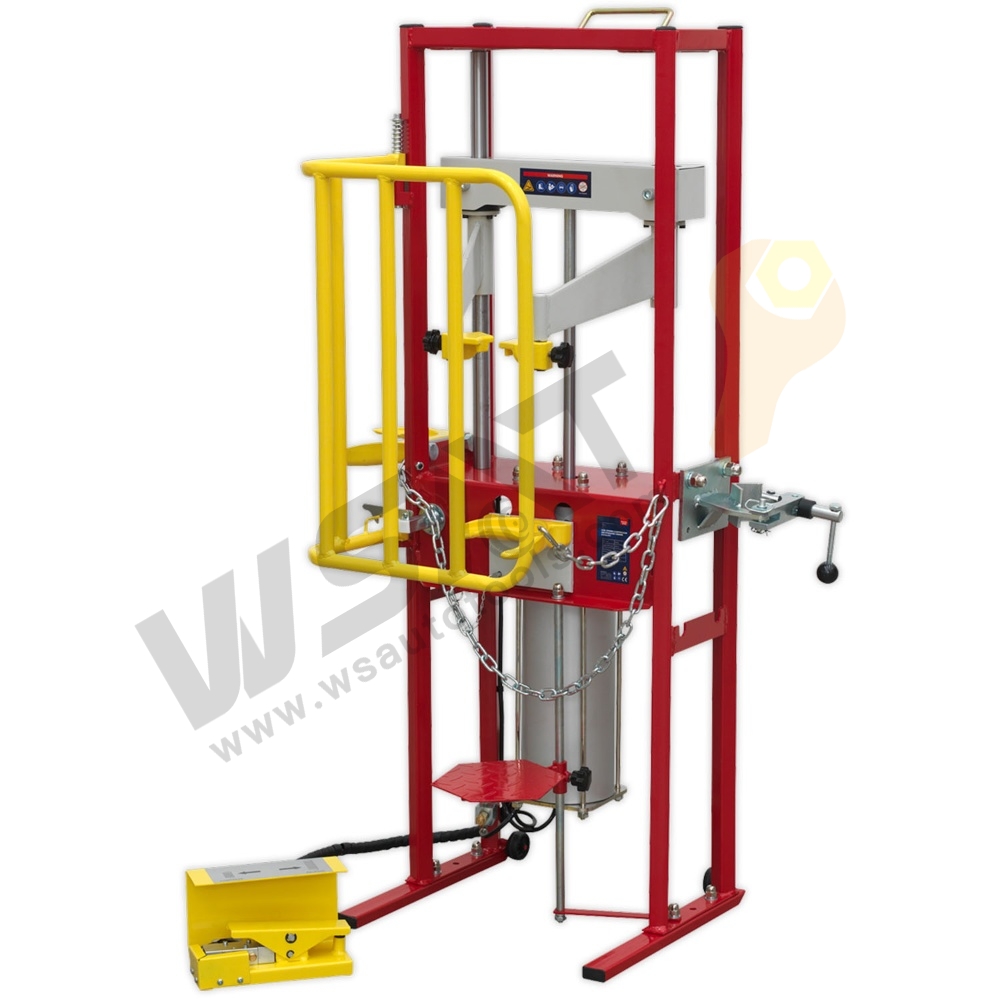
Winsen Professional Pneumatic Spring Compressor
For high-volume professional workshops, the pneumatic spring compressor represents the most advanced and efficient solution. Powered by compressed air, this air-powered spring compressor significantly reduces manual effort while enhancing speed and consistency.
Engineering and Construction
Professional pneumatic spring compressors are built with:
• High-hardness steel construction
• Heavy-duty clamping arms
• High-quality pneumatic cylinders
• Premium air control components
• Reinforced structural frames
These units are designed for strong versatility and easy operation, making them suitable for sedans, SUVs, off-road vehicles, and pickup trucks.
Two Modes of Operation
Advanced models offer dual operating modes, allowing technicians to select the appropriate compression method depending on the shock absorber shape and spring configuration. This flexibility improves compatibility across various suspension systems.
Safety and Reliability
Multiple safety protection systems are integrated into professional-grade pneumatic spring compressors:
• Automatic locking mechanisms
• Reinforced clamping arms
• Controlled pressure release systems
• Stable base platforms
These safety layers ensure more relaxed and controlled disassembly, reducing risk in high-tension operations.
Operational Benefits
• Faster compression cycles
• Reduced technician fatigue
• Consistent compression force
• Increased productivity in commercial workshops
In busy suspension repair environments, a professional pneumatic spring compressor significantly improves throughput while maintaining strict safety standards.
Safety and Selection Guide
Safety Best Practices
Spring compression involves stored mechanical energy that can be hazardous if mishandled. Key safety principles include:
• Always inspect hooks, claws, and locking mechanisms before use
• Ensure symmetrical positioning on the coil spring
• Avoid uneven torque application
• Never exceed recommended compression limits
• Conduct routine lubrication and maintenance
Regular inspection of threaded rods, pneumatic cylinders, and structural welds ensures long-term equipment reliability.