
In my years of working with manufacturing plants, maintenance teams, and automotive workshops, I have seen one recurring problem slow people down more than complex machinery ever could: poor tool organization. Many teams invest heavily in advanced equipment but overlook something far more fundamental—how tools are stored, moved, and accessed during daily work.
This is where multifunctional tool carts quietly become game changers. When chosen correctly, they do not just store tools; they transform workflow efficiency, reduce wasted motion, and turn chaotic workspaces into productive systems. For those new to industrial or professional tool management, understanding how to find the right multifunctional tool cart is a practical first step toward upgrading efficiency.
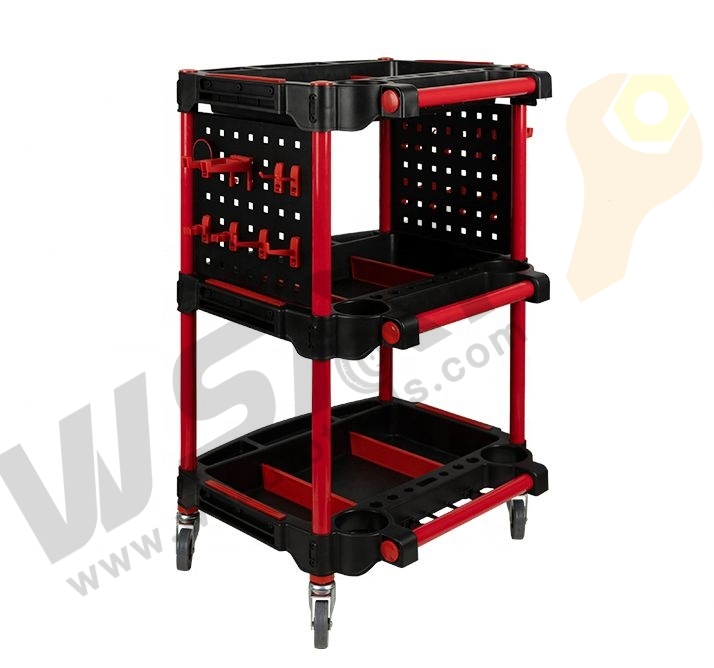
Winsen Multifunctional Tool Cart
Why Workspace Efficiency Starts with Smarter Tool Organization
Efficiency problems rarely come from workers lacking skill. More often, they come from poor layout and disorganized tools. I have watched technicians walk back and forth across workshops dozens of times per shift just to retrieve commonly used tools. Those minutes add up quickly.
A well-organized workspace:
Reduces unnecessary movement
Shortens task completion time
Minimizes interruptions during critical operations
Tool carts play a central role in this system. Instead of fixed tool cabinets that force workers to leave their workstations, a mobile solution brings tools directly to the task. This simple shift—from “go to the tools” to “tools come to you”—creates an immediate and measurable efficiency upgrade.
For beginners, it is important to understand that efficiency is not about working faster; it is about removing friction from the workflow. Multifunctional tool carts are designed precisely for this purpose.
What Makes a Tool Cart Truly Multifunctional
Not every tool cart deserves the label “multifunctional.” In practice, I define a multifunctional tool cart as a mobile workstation that integrates storage, organization, mobility, and task support into a single unit.
Key characteristics include:
Multiple storage formats: drawers, shelves, pegboards, and compartments
Modular or customizable layouts to fit different tools and tasks
Durable construction capable of handling industrial loads
Functional work surfaces for assembly, inspection, or repair
A basic rolling cart may hold tools, but a multifunctional tool cart supports how the work is actually done. In automotive repair, this might mean deep drawers for power tools and a reinforced top for parts placement. In manufacturing maintenance, it may involve labeled drawers aligned with specific procedures.
Understanding this distinction helps beginners avoid underinvesting in carts that look practical but fail to deliver real efficiency gains.
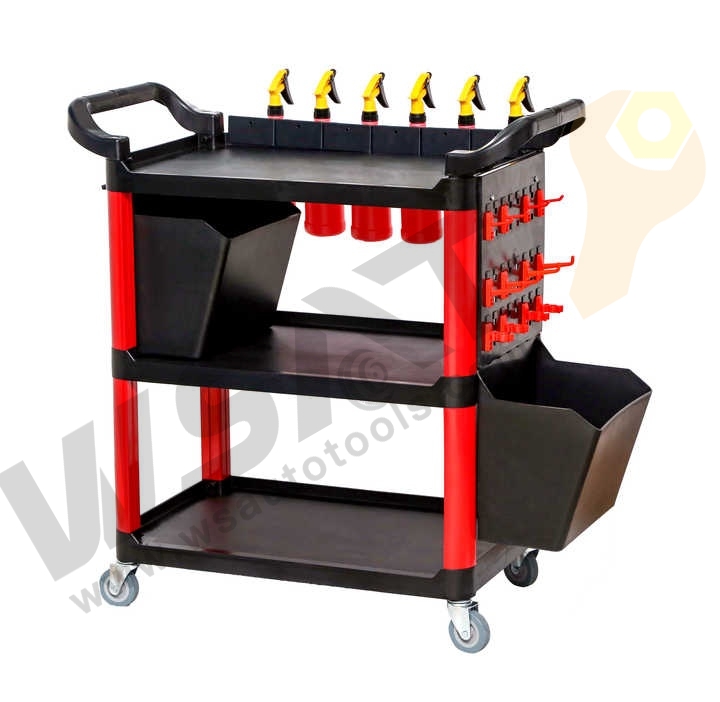
Winsen Multifunctional Tool Cart
How Multifunctional Tool Carts Streamline Daily Workflows
From my experience, this is where multifunctional tool carts deliver their greatest value. When integrated properly, they streamline workflows in several critical ways.
Centralized Tool Access
All essential tools are stored in one mobile unit, organized by frequency of use or task sequence. This eliminates repeated trips to storage areas and reduces downtime between steps.
Improved Mobility and Task Flow
High-quality casters and locking systems allow carts to move smoothly across workshop floors while remaining stable during use. This enables technicians to reposition their tools as work progresses, maintaining momentum instead of resetting their workspace.
Reduced Cognitive Load
Clear drawer layouts and standardized organization reduce decision fatigue. Workers spend less time searching and more time executing tasks correctly.
Ergonomic Benefits
Proper cart height, smooth drawer slides, and logical tool placement reduce bending, reaching, and awkward postures. Over time, this improves worker comfort and supports consistent productivity.
When beginners ask me why experienced teams care so much about tool carts, my answer is simple: workflow efficiency is built on small, repeatable advantages, and multifunctional tool carts provide many of them at once.
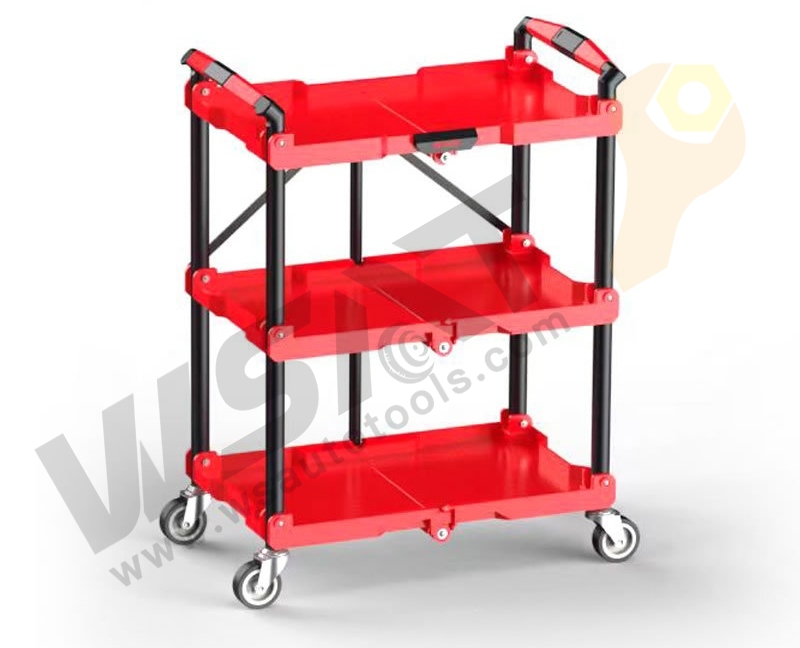
Winsen Foldable Multifunctional Tool Cart
Key Features to Look for When Choosing a Multifunctional Tool Cart
Selecting the right tool cart requires aligning features with real working conditions. Based on practical use, these are the factors that matter most.
Load Capacity and Structural Strength
Look beyond total load ratings. Drawer load capacity, frame thickness, and reinforcement points determine whether the cart can safely hold heavy tools over time.
Storage Configuration
Drawer depth, adjustable dividers, and modular accessories allow the cart to evolve with changing tool sets. This flexibility is essential for long-term efficiency.
Mobility and Stability
Industrial-grade wheels, swivel casters, and reliable braking systems ensure the cart moves easily but stays firmly in place during work.
Durability and Surface Materials
Powder-coated steel frames, corrosion-resistant finishes, and reinforced worktops improve lifespan, especially in demanding environments.
For newcomers, the key lesson is this: a multifunctional tool cart should support your workflow, not force you to adapt to it.
Upgrading Efficiency Through the Right Tool Cart Investment
Efficiency upgrades are often discussed in terms of automation or digital systems, but physical workflow tools still deliver some of the fastest returns on investment. A well-chosen multifunctional tool cart improves productivity from day one.
Over time, the benefits compound:
Faster task completion
Reduced tool loss and damage
More consistent work quality
Better compliance with 5S and lean manufacturing practices
From my perspective, investing in the right multifunctional tool cart is not a purchase—it is an operational upgrade. For beginners building or improving a workspace, few decisions offer such a direct and lasting impact on efficiency.
When you find multifunctional tool carts designed for real-world tasks, you are not just organizing tools. You are building a smarter, more efficient way of working.