

Leakage current is small, silent, and easy to ignore — until it trips a breaker, drains a battery, or becomes a safety hazard. Finding it requires more than just a regular multimeter. You need a dedicated digital leakage current clamp meter.
But not all leakage clamp meters are the same. Depending on whether you work in industrial maintenance, automotive diagnostics, or general electronics repair, you need different capabilities.
Below are three digital leakage current clamp meters — each a specialist in its own field.
Hunter 1: The All‑Rounder
Digital Leakage Current Clamp Meter
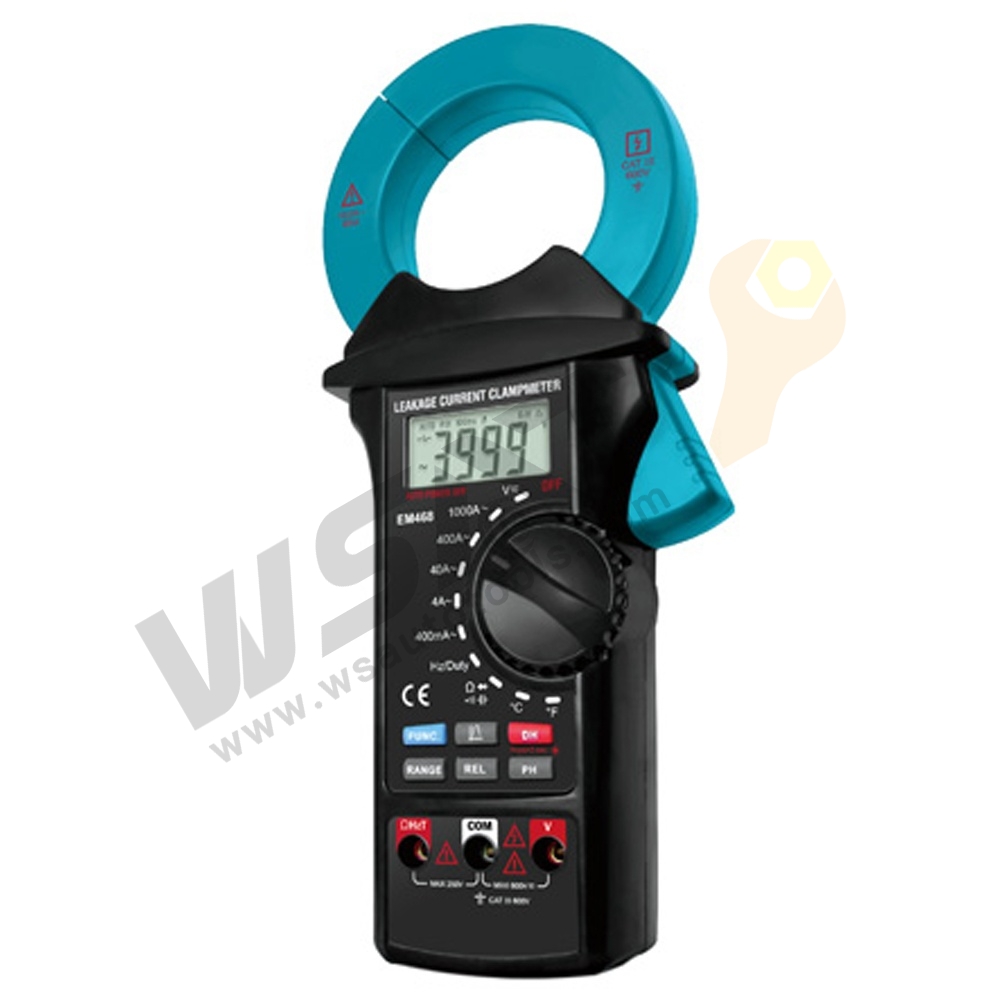
This meter uses a clamp-shaped sensor to measure AC current. It can handle heavy loads up to 1000 amps, but it is also sensitive enough to catch tiny leakage currents down to just a few milliamps. Its frequency response goes beyond 1kHz, so it works well even when the current waveform is not a perfect sine wave.
What makes this meter truly useful is its extra features. You can select different frequency bands (40–1kHz or 50–60Hz) to focus on specific types of leakage. It also has a peak hold function that locks onto the highest AC current reading — great for spotting sudden surges. Other handy features include data hold, relative measurement, and both manual and autorange options.
But this meter is not just a current clamp. It is also a full-featured digital multimeter. You can measure AC and DC voltage, resistance, diode, continuity, capacitance, frequency, duty cycle, and even temperature. The whole unit has full-range overload protection, so it stays safe even if you accidentally connect it to a high-energy circuit.
Who is it for?
This meter is ideal for electricians and appliance repair technicians who need one reliable tool for many different jobs — from checking heavy machinery to finding small leakages in home appliances.
Hunter 2: The Automotive Sleuth
Digital Leakage Low Current Clamp Meter

If you have ever worked on a car with a battery that keeps dying overnight, you know how frustrating parasitic draw — also called dark current — can be. This meter is built specifically for that job.
Unlike a general-purpose clamp meter, this one focuses on low currents. It automatically shifts between ranges and measures from 0 to 60 amps with a fine resolution of just 1 milliamp. That means you can see exactly how much current a sleeping car module is still using.
One of the nicest features is the one-key zero adjustment. Just press a button to reset the reading, which is very helpful when you are working in tight engine bays or need to compensate for lead resistance. The meter also automatically recognizes whether the current is AC or DC, so you never have to guess or switch modes manually.
It can store up to 99 readings in memory, allowing you to record and compare measurements over time. And if you forget to turn it off, it shuts down automatically after 5 minutes to save battery.
Who is it for?
This meter is made for automotive repair technicians and auto electricians who spend their days tracking down battery drains. If your job involves finding out why a car won't start in the morning, this is your tool.
Hunter 3: The AC/DC Master
AC/DC Digital Leakage Current Clamp Meter
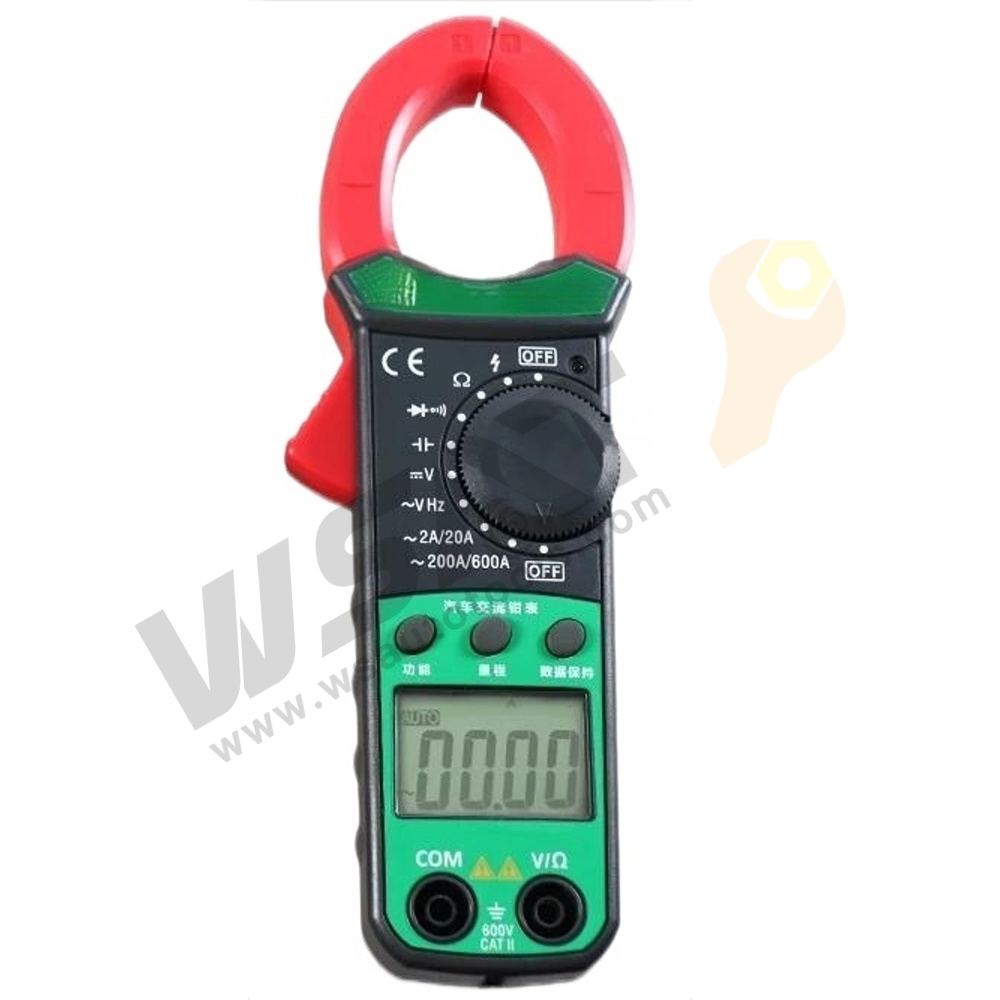
This meter is a 3½-digit portable autorange digital multimeter with a built-in clamp. What sets it apart is that it measures both AC and DC current, and it does so with True RMS (TRMS) for AC — meaning it gives you accurate readings even when the AC waveform is distorted, which is common in modern electronics and industrial equipment.
But the capabilities go well beyond current. This meter also measures AC voltage (True RMS), DC voltage, resistance, frequency, capacitance, and even checks continuity and diode forward voltage drop. It is compact and easy to carry, yet it does not compromise on reliability. Overload protection and data hold come standard.
In short, this is not just a leakage current meter — it is a complete portable multimeter that happens to have a very capable AC/DC current clamp. Whether you are working on a rectifier, an inverter, a battery system, or an industrial control panel, this meter gives you the truth — not a rough estimate.
Who is it for?
This meter is best for electronics repair engineers, industrial control cabinet maintenance staff, and professionals who regularly deal with mixed AC and DC signals. If you need True RMS accuracy and the ability to measure both AC and DC leakage currents in one tool, this is your choice.
Quick Comparison Table
| Feature | The All‑Rounder | The Automotive Sleuth | The AC/DC Master |
|---|---|---|---|
| Max AC current | 1000A | 60A | Autorange (TRMS) |
| Smallest measurable leakage | Several mA | 1mA | Autorange |
| Measures DC current | × | √ | √ |
| True RMS for AC | × | × | √ |
| Peak hold | √ | × | × |
| Frequency band selection | √ | × | × |
| Made for car dark current | × | Yes | × |
| Measures temperature | √ | × | × |
| Stores readings | × | 99 records | × |
| Typical user | Electrician / Repair | Auto technician | Electronics / Industrial |
Choosing the right digital leakage current clamp meter is not about which one is "best" — it is about which one matches your daily work.
- The All‑Rounder if you need one meter that can handle both heavy currents and tiny leakages across many different jobs.
- The Automotive Sleuth if you spend your days chasing battery drain in cars and need high resolution, data storage, and one-key zero.
- The AC/DC Master if you work with mixed AC and DC signals and need True RMS accuracy in a portable clamp meter.
Now — which leakage hunter will you take to work?